
Small moments of art
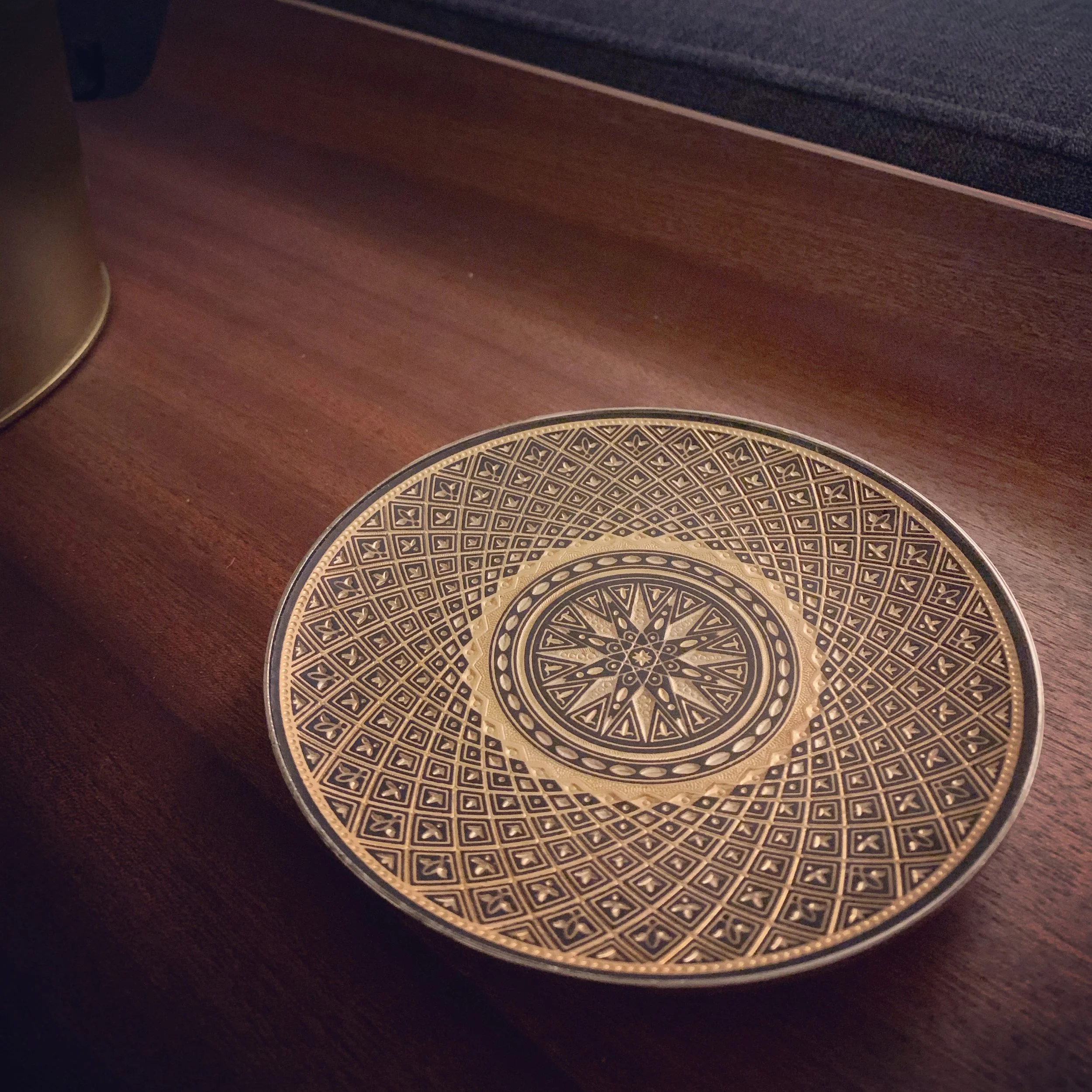
There is a question I find myself returning to, quietly and often: what does it feel like to move through a life where the objects around you carry some trace of thought?
They are neither grand pieces nor expensive ones. Just things that carry some quality of attention in their making, a texture that rewards the fingertip, a design that holds the eye for a moment longer than expected, a form that feels considered rather than merely convenient. These are not just functional presences in a room, they are a quiet, continuous conversation with the part of you that notices things. And that conversation, I think, shapes how you feel in ways that are difficult to measure but very easy to sense.
This is not a new idea. Cultures that understood craft deeply have always known it.
In Japan, the philosophy of wabi-sabi, rooted in Zen Buddhism and refined through centuries of the tea ceremony, holds that beauty is found not in perfection but in the imperfect, the impermanent, the incomplete. A ceramic bowl with an uneven rim. A surface worn smooth by years of use. These are not flaws; they are the object's history made visible. The Japanese tea ceremony elevated the bowl, the ladle, the whisk, the most ordinary utensils, into objects of profound contemplation. Not because they were ornate, but because they were considered. Every detail of a tea bowl was chosen with the understanding that the person holding it would feel the difference.
Sir John Soane understood this in his own way. The museum he left to the public at Lincoln's Inn Fields in London was not a gallery in the conventional sense, it was a house, lived in, accumulated over a lifetime. Every object he placed there, from an Egyptian sarcophagus to a Roman fragment to a simple architectural model, was arranged in relation to every other object, so that the whole became more than the sum of its parts. Soane believed that to surround yourself with things of beauty and meaning was not vanity. It was a form of thinking. A way of keeping the mind alert and the imagination alive.
Perhaps the most quietly radical example of this belief I have ever encountered is the house at 575 Wandsworth Road in South London, the home of Khadambi Asalache, a Kenyan-born poet and civil servant at HM Treasury, who over twenty years hand-carved fretwork across almost every surface of his modest terraced house. He drew his inspiration from the Alhambra in Granada, from Zanzibar doors, from Damascus interiors, from Ottoman pattern. He was entirely self-taught. He worked with reclaimed pine from skips. The result was so extraordinary that the National Trust acquired the house after his death in 2006, and it now stands exactly as he left it, a jewel box of a home that no one passing on the street would suspect exists behind its plain front door.
What Asalache understood, I think, is that the objects around us are an extension of thought. That to make your environment beautiful, even from nothing, even slowly, even in a terraced house in south London, is to insist on something. To refuse to be indifferent to your own daily life.
This is the belief at the heart of what we do at Bombay Design Co. Not that beautiful objects should be rare or out of reach, the opposite, in fact. The cushion that makes a sofa feel considered. The tote that carries your week with a little more grace. The coaster that turns a quiet moment into something you notice. These are not grand gestures. They are small ones. But I believe that small gestures, repeated daily, accumulate into something real, a quality of attention in the way we live that is easy to underestimate and very hard to live without, once you have felt it.
The Japanese have a phrase, mono no aware, often translated as the pathos of things, the bittersweet awareness that beautiful things are transient. But I have always read it as something gentler than sadness. An invitation to pay attention. To notice what is in front of you, while it is there.
What I hope our objects carry, beyond the motif and the material and the carefully considered stitch, is a small reason to look.
— Alpesh, Founder, Bombay Design Co. I'd love to hear from you, write to me at alpesh@bombaydesign.co