
Sensory Interior Design: How Touch, Weight, and Resonance Shape a Home
Sensory interior design is the practice of curating a home based on touch, weight, and emotional resonance rather than purely visual appeal. It prioritises natural, tactile materials that age gracefully over mass-produced items designed for short-term perfection.
We mostly meet homes as pictures now. We scroll through rooms, save them, and compare our own against them, and almost all of that judging happens through the eye. But nobody lives in a photograph. We live in rooms by touch: the cushion pulled onto a lap, the weight of a mug set down on a table, the cotton that has softened over a hundred washes. The rooms we love most are rarely the ones that photograph best. They are the ones that feel right in the hand.
Over the past months, three posts in this Diary have been circling this same idea from different directions. This piece draws them together.
Touch: the material comes first
In Natural Cotton: Designed for the Senses, I wrote that some materials announce themselves, and cotton is not one of them. It receives. It settles. It grows softer and warmer with every wash rather than wearing out.
That is the first principle of sensory design: choose materials for how they feel, and for how that feeling changes over time. Natural cotton, linen, wool, wood, clay, and stone all reward the hand differently, and all of them improve with use. Many synthetics do the opposite; they look their best on the first day and lose something each day after. A room built from honest materials is one you keep wanting to touch, which is another way of saying a room you keep wanting to live in.
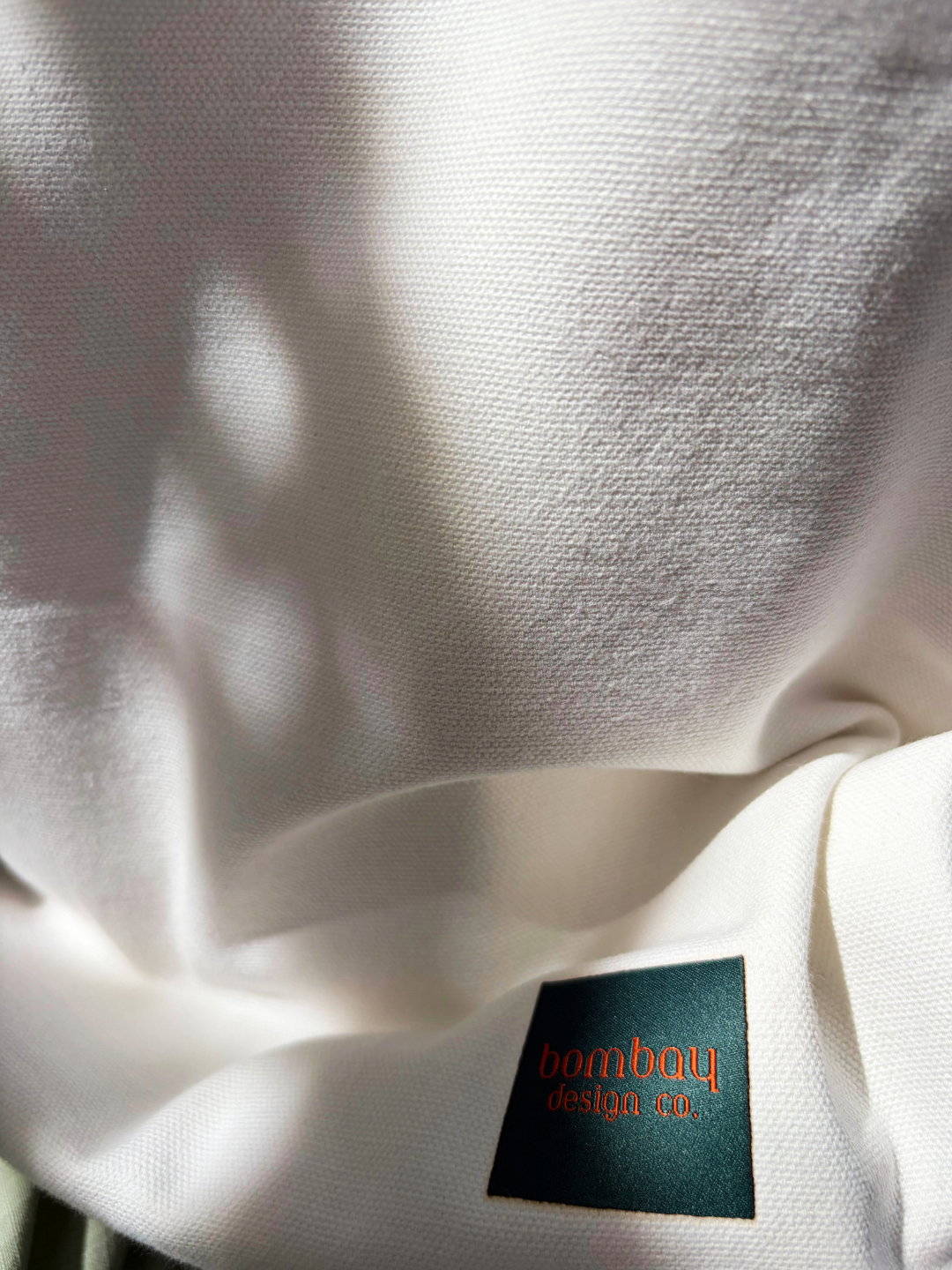
A fabric that carries the earth in its weave asks nothing of you. It simply settles, softens, and belongs.
Weight: what it tells us about permanence
Weight is the sense that interior design talks about least, and it may be the most telling. A heavy ceramic bowl, a solid wooden table, a thick cotton cushion that holds its shape: each one tells you, before you have even thought about it, that the thing was made to last. Weight reads as care. A light, hollow object is easily set aside; a weighty one asks to be put somewhere deliberately.
You don't need heavy furniture to use this. Small objects carry weight well: a coaster with real substance under your glass, a bowl that sits firmly on a shelf, a book you keep within reach. Each gives the hand something to rest against.
Ageing: why imperfection is part of the design
In What is Wabi-Sabi Interior Design?, I wrote about travelling through Japan and finding that the beauty of its oldest places came from what time had done to them: moss left unscrubbed, timber darkened by centuries. Sensory design borrows that patience. A material that ages visibly is a material you experience, not just one you look at. The softened corner, the faded colour, and the slight wear where a hand always rests are all part of how a home comes to feel like yours.
This is where sensory design parts company with design built for short-term perfection. A flawless surface can only lose its appeal; an honest one keeps gaining character.
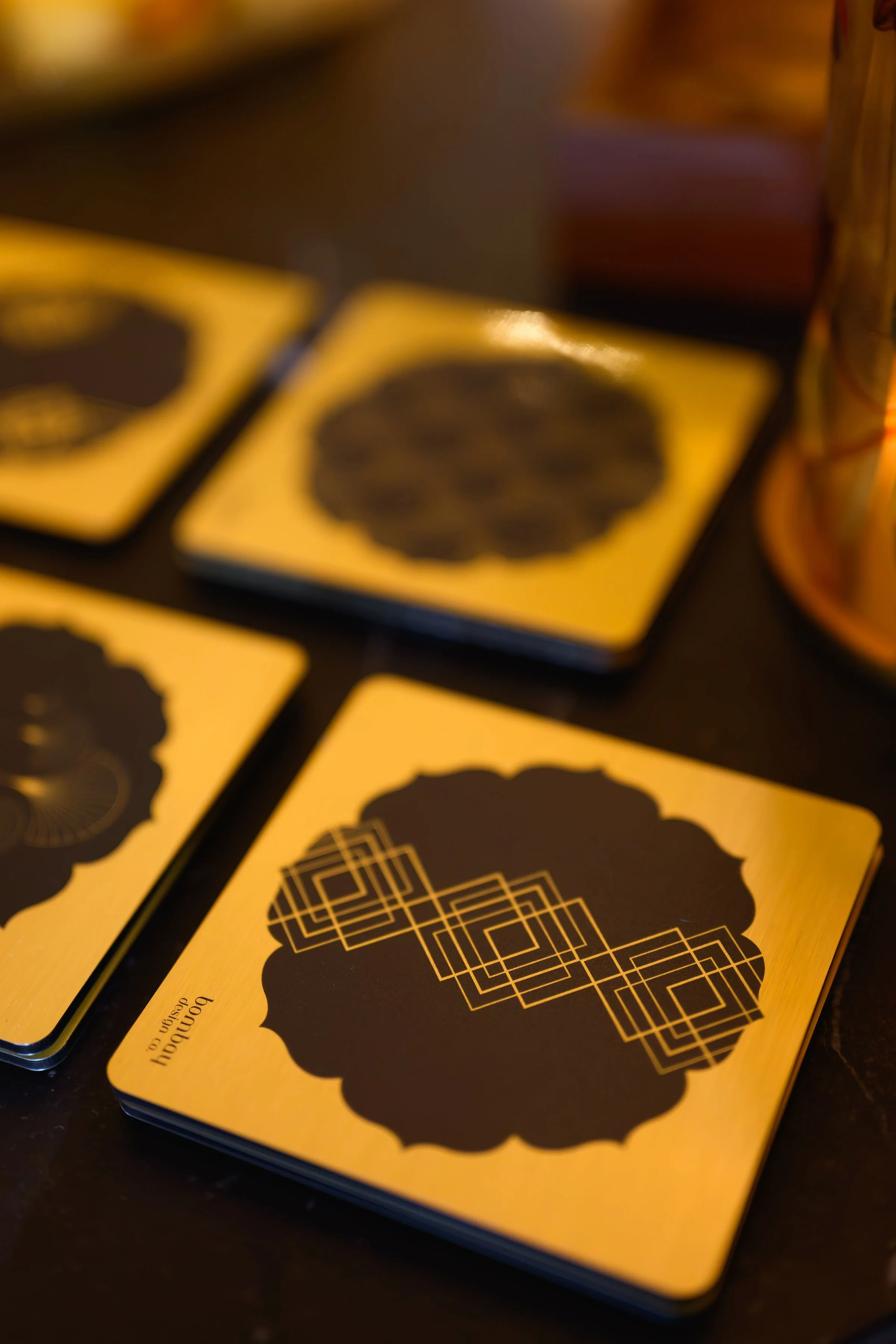
Art Deco geometry details beautifully captured on this set of Bombay Deco Coasters
Emotional resonance: objects that carry a trace of thought
The third thread comes from Small Moments of Art, and it is the one that holds the others together. That post asked what it feels like to move through a life where the objects around you carry some trace of thought. I believe this is the deepest sense a home speaks to. A motif that tells a story, a piece brought back from a journey, an object chosen rather than merely bought: these change how a room feels in a way that no colour scheme can.
Emotional resonance is the reason two rooms with identical furniture can feel completely different. One holds things that mean something to the person living there. The other simply holds things.
How to start designing for the senses
Notice what your hands meet. For a day, pay attention to everything your hands touch at home: the arm of the sofa, the edge of the table, the cushion you lean against. Those surfaces are the room as you actually live it.
Replace one thing at a time. Begin with what you touch most: the cushion you lean against every evening, the napkin at every meal, the bag you carry every day. Swapping these for natural, well-made pieces changes daily life more than a new feature wall would.
Give materials time. Resist judging a natural fabric or wood finish on its first day. Wash it, use it, and let it settle. The point is how it feels in six months.
Keep a few things with a story. Every room benefits from at least one object you could talk about for five minutes: where it came from, who made it, why you kept it.

This handcrafted marble plate from India with delicate floral inlay work has crossed borders with me to make every new country I lived in feel like home.
Where our work meets this idea
Everything we make at Bombay Design Co. is designed with this in mind. Each piece is digitally embroidered on natural cotton, chosen because, as I wrote in the cotton post, the thread beds into it rather than sitting on top of it, so the surface and the design feel like a single thing under the hand. Our coasters are printed on brushed gold aluminium, with a weight and a cool, metallic touch that make setting a glass down a small, deliberate moment. And every motif, from the pomegranates of Jardin Nar to the trees of Baadiyah, carries a story drawn from a place and a tradition. Touch, weight, and resonance: we think of them as the three materials every piece is really made from.
A home designed only for the eye can be admired. A home designed for the senses can be lived in. The difference is rarely visible in a photograph, but you notice it the moment you sit down.
— Alpesh, Founder, Bombay Design Co. I'd love to hear from you, write to me at alpesh@bombaydesign.co