
What is Wabi-Sabi Interior Design?
Wabi-sabi is the Japanese philosophy of finding beauty in imperfection, impermanence, and incompleteness. In interior design, it means choosing natural materials that age visibly, handcrafted objects that carry the maker's touch, and rooms that feel lived-in rather than staged. It is less a decorating style than a way of seeing: the crack, the fade, and the irregular stitch are not flaws to be corrected but evidence of a life being lived.
I should say up front that wabi-sabi is not something you can order online in a weekend, and most of what is sold under its name misses the point. I understood this properly only after travelling through Japan in 2024, expecting to find a design style and finding, instead, a kind of patience.
What wabi-sabi actually means?
The term joins two older ideas. Wabi originally described the austere loneliness of living simply, away from society, and evolved to mean a rustic, understated elegance. Sabi refers to the beauty that comes with age, the patina on bronze, the silvering of wood, the softening of things used and kept. Together they describe a beauty that is imperfect, impermanent, and incomplete, a quiet counterpoint to the Western instinct that beautiful means flawless, finished, and new.
The philosophy grew out of Zen Buddhism and found its clearest expression in the Japanese tea ceremony, where a humble, irregular, handmade bowl came to be valued above flawless imported porcelain, precisely because its imperfections made it singular.
What Japan taught me that the books didn't
In Kyoto, I stood in front of temple gardens that have been tended for centuries and noticed that nothing in them tries to hide its age. Moss is not scrubbed away; it is the point. In Nara, the wooden temples wear every one of their centuries openly, beams darkened, grain raised, and are more beautiful for it, not less. Even Tokyo and Osaka, cities that reinvent themselves constantly, keep small pockets of this patience: the worn noren curtain at a shop doorway, a ceramics stall where no two cups match, an old timber house standing quietly between glass towers.
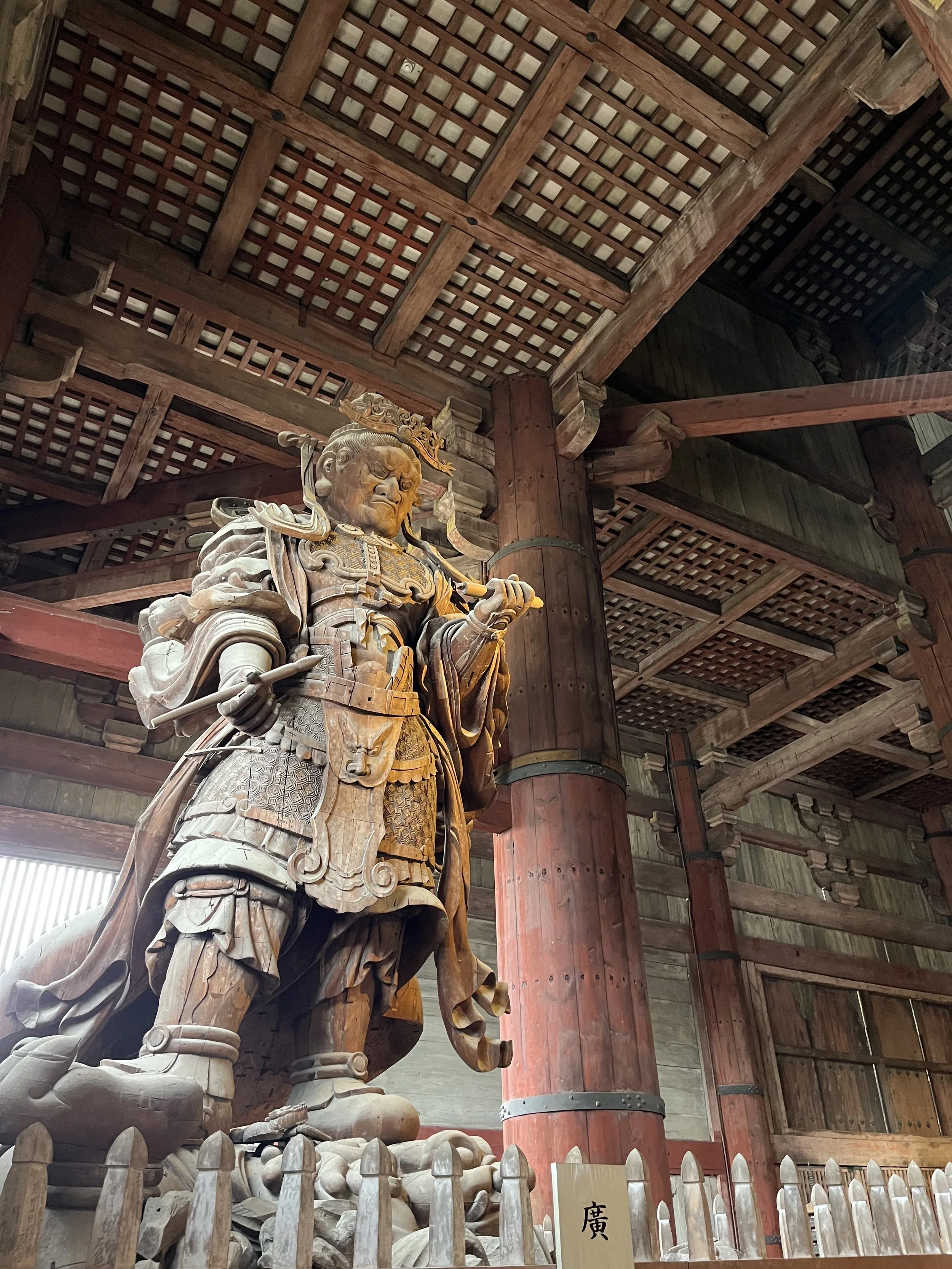
Tōdaiji is one of Japan's most famous and historically significant temples and a landmark of Nara
What struck me most was that none of it felt curated. Wabi-sabi in Japan is not an aesthetic applied to things. It is the natural result of keeping things, using things, and letting time do what time does. That distinction matters enormously when you try to bring the idea home.
How to bring wabi-sabi into a modern home
Choose materials that age well, then let them. Natural cotton, linen, wood, clay, stone, and brass all develop character with use. A linen cushion that creases, a wooden table that marks, a brass tray that dulls to a warm haze, these are materials keeping a diary. Synthetic materials, by contrast, tend to look their best on day one and decline from there; wabi-sabi asks you to invest in things that do the opposite.
Favour the handmade over the perfect. A hand-embroidered motif will never have the machine's uniformity, and that is its value. The slight variation in stitch density, the thread that sits a little proud of the fabric, these are the traces of a person's hands and attention. In a home, one honestly handmade object carries more presence than a shelf of flawless reproductions.
Leave space empty. Wabi-sabi is as much about what you leave out. Japanese interiors taught me the discipline of the pause, the bare stretch of wall, the single object on a surface, the room allowed to breathe. Emptiness is not absence; it is what lets the things you do keep actually be seen.
Repair rather than replace. The Japanese art of kintsugi, mending broken ceramics with gold-dusted lacquer, is wabi-sabi's most famous expression: the repair is made visible, even celebrated, because the break is part of the object's story. You don't need gold lacquer to apply the principle. Re-stitch the cushion. Oil the scratched table. Keep the mug with the hairline crack for pens. A repaired home has a memory; a replaced one doesn't.
Let colour come from materials, not paint charts. The wabi-sabi palette is simply what natural materials look like: undyed cotton, clay, moss, bark, stone, rust. Rooms built from these tones don't date, because nature's colours never had a season to begin with.
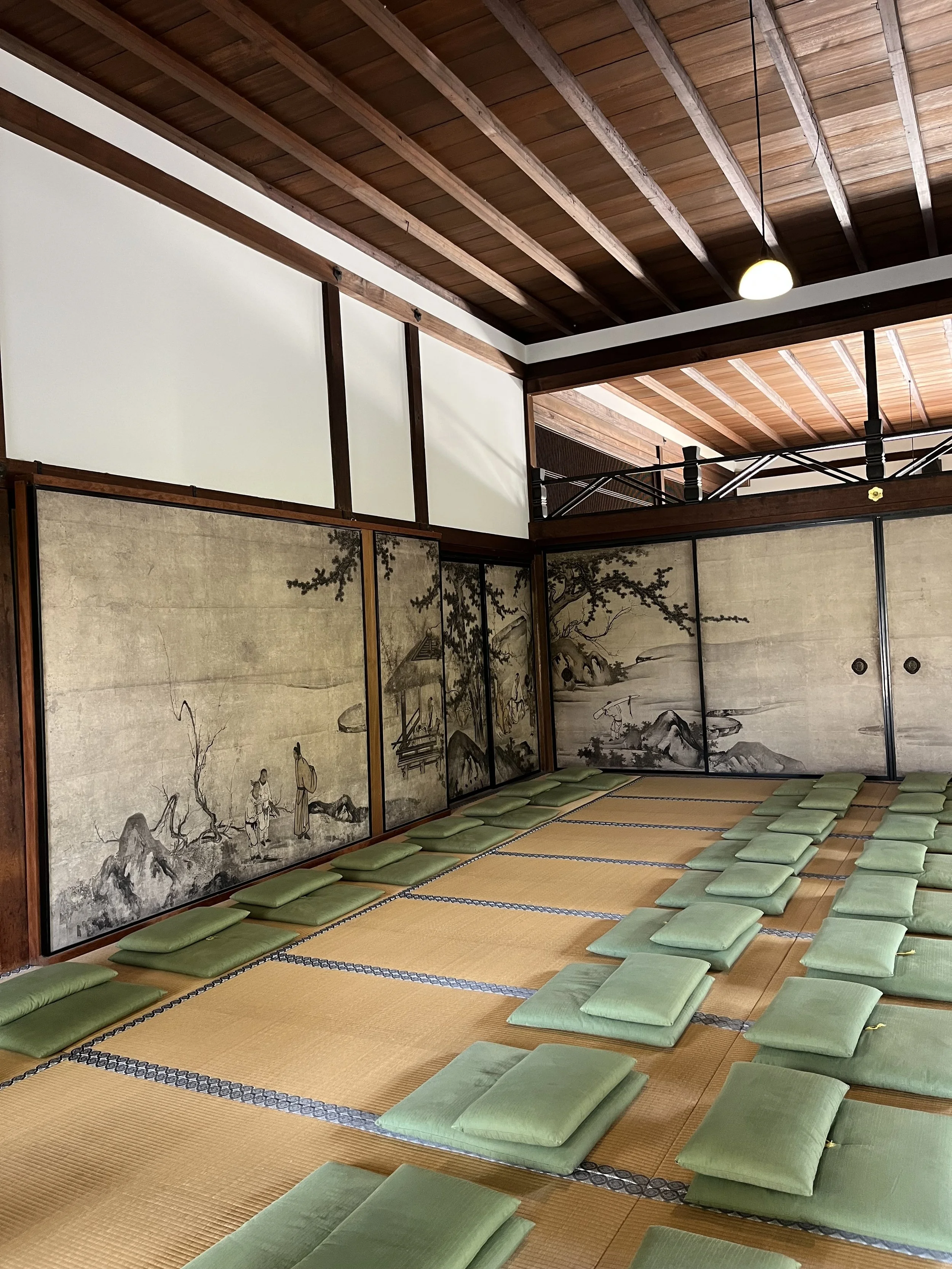
Interiors of Kenninji, a Zen temple located just south of Kyoto'sfamous Gion entertainment district.
Where our own work meets this idea
I wrote in an earlier Diary post about small moments of art, the belief that everyday objects can carry story and intention. Wabi-sabi is, in many ways, the older and wiser version of that idea, and it is quietly present in how our pieces are made. Every Bombay Design Co. cushion and tote is embroidered on 100% cotton and stitched by skilled craft people, which means no two are strictly identical, the stitch varies, the cotton creases, the piece softens with use and washing. We think of this not as a limitation of the craft but as its entire point. An object touched by hands, in Mumbai or London, arrives already carrying a little life, and gathers more of yours as it goes.
Wabi-sabi, in the end, is not something you buy for a home. It is something you allow. Choose a few things made slowly and honestly, let them age in your company, and the beauty arrives on its own, one small, imperfect moment of art at a time.
— Alpesh, Founder, Bombay Design Co. I'd love to hear from you, write to me at alpesh@bombaydesign.co