
What Is Fretwork? The History Behind Hand-Carved Wood Screens
Fretwork is the craft of cutting ornamental, openwork patterns into wood, so that the design is formed as much by the spaces removed as by the material left behind. A fretwork screen is solid and transparent at once: it filters light, lets air move, and offers privacy without sealing a room away from the world. The word comes from "fret," an old term for an interlaced geometric pattern, and the technique appears, with remarkable independence, in cultures across Africa, Asia, and Europe.
That last part is what fascinates me most. Very different places, with very different materials and beliefs, kept arriving at the same idea: that a wall with patterned openings is better than a wall without them. I have been lucky enough to stand in front of several of these traditions on my travels, and each one taught me a slightly different reason why.
India: the architecture of discretion
It was in Jodhpur that I first understood a fretwork screen is a kind of architecture of discretion. Standing beneath the latticed windows of Mehrangarh Fort, screen after screen rising up the sandstone walls, I realised the pattern's real purpose: those inside could watch the courtyards and the blue city below without ever being seen themselves. India's best-known expression of this idea is the jali, the pierced screen I wrote about in an earlier post on the architecture of pattern, most famous in the marble of Mughal tombs and the sandstone facades of Rajasthan. But the same instinct runs through Indian woodwork too: the carved wooden facades and jharokha windows of Gujarati and Rajasthani havelis, where merchant houses turned entire street fronts into layered, breathing patterns. Growing up visiting these places, and returning as an adult with a designer's eyes, I came to see the screen as India's answer to a hot climate and a layered society: shade without darkness, enclosure without isolation, ornament that earns its keep.
Morocco: the same idea, met again
Years later, in Morocco, I met the idea again and recognised it instantly. The mashrabiya, a screen of turned and joined wooden pieces, traditionally covered windows and balconies across the Islamic world, from Cairo to Fez. Its function is the same beautiful double act I had first seen in Jodhpur: those inside can see the street, feel the breeze, and follow the life of the city, while remaining unseen themselves. The pattern does the work of a curtain, a shutter, and an air-conditioner at once, cooling the air as it passes through the latticework. Standing in a riad courtyard, watching sunlight arrive through a carved screen as a scatter of stars on the floor, you realise the screen isn't decorating the light. It is composing it.
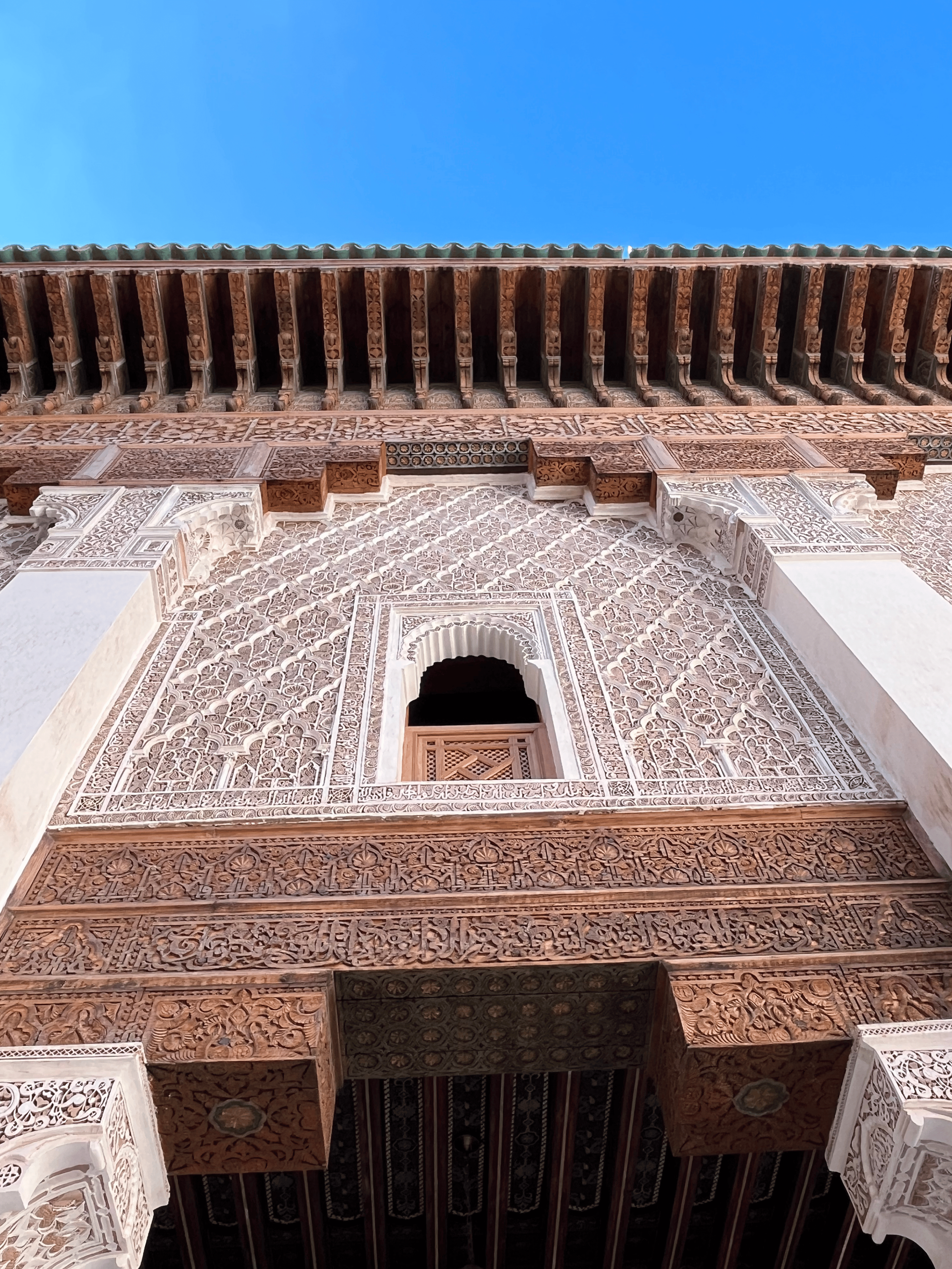
Madrasa Ben Youssef in Marrakech, Morroco
Malta: the idea travels by sea
Malta gave me the lineage in miniature. The muxrabija, a small projecting wooden window box found on old Maltese houses, is widely understood to descend from the Arabic mashrabiya, carried across the Mediterranean and adapted to a new island, a new climate, and eventually a new faith. Many consider it an ancestor of Malta's famous painted closed balconies. I remember noticing these modest wooden lookouts in village streets and only later learning their ancestry. It is one of my favourite examples of what I keep returning to in this Diary: motifs and forms are travellers, crossing seas and centuries, changing their accent as they go.
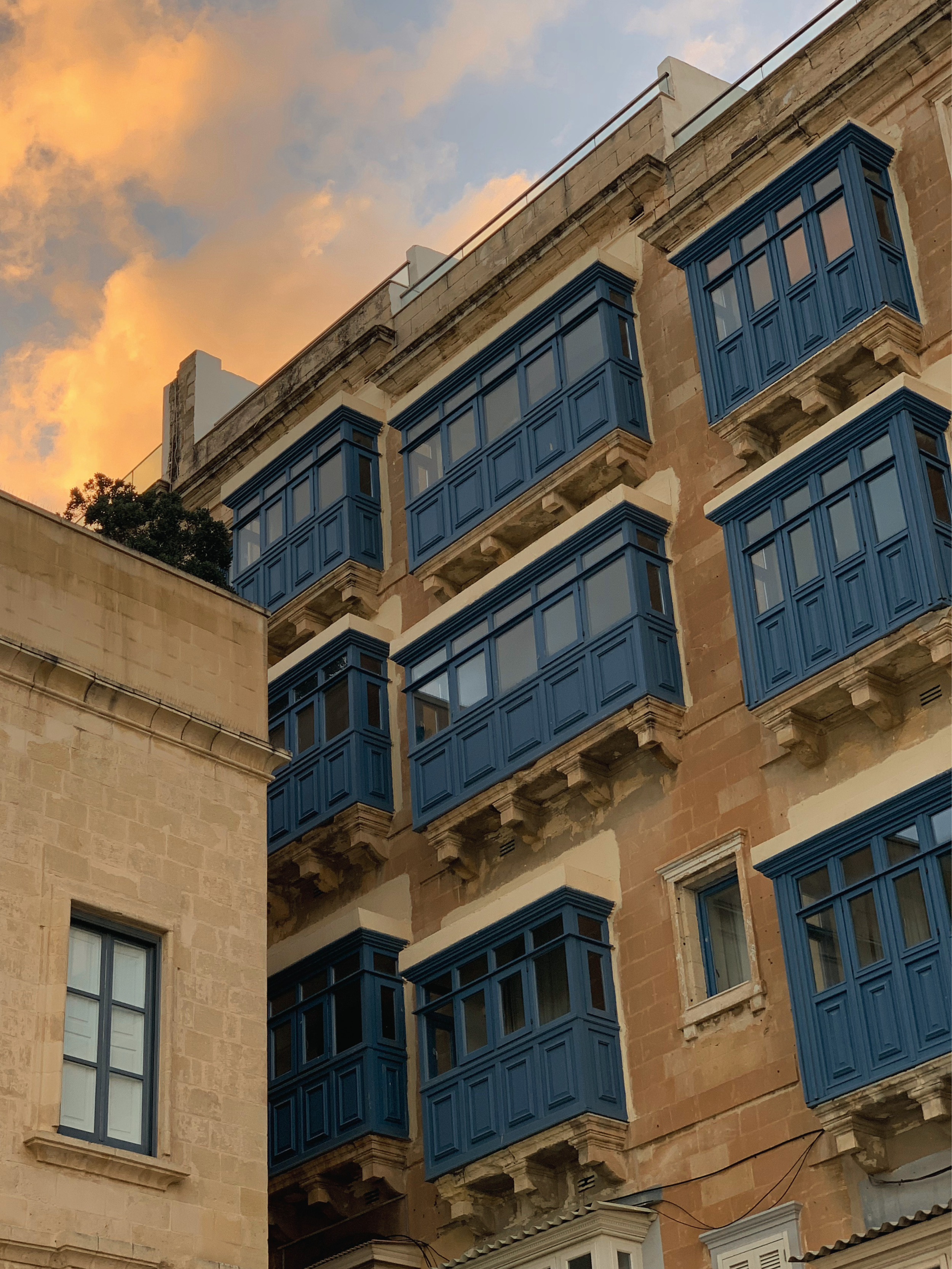
Muxrabija, a small projecting wooden window box found on old Maltese houses
Romania: carving as a crescendo
Romania showed me what this craft becomes when it is given everything, royal patronage, master workshops, and no reason to stop. At Peleș Castle in Sinaia, built for King Carol I in the decades around the turn of the twentieth century, wood is not a detail of the architecture; it very nearly is the architecture. The Hall of Honour rises through storeys of carved walnut, galleries, balustrades, and openwork panels stacked into a vertical forest of pattern. And then, deep in this most European of castles, comes a room that made me smile: the Moorish Salon, where the screen aesthetic of the Islamic world, the same language I had stood inside in Morocco, reappears in the Carpathian mountains, commissioned by a European king because the form was simply too beautiful to leave behind. Fretwork at Peleș is not about privacy or climate. It is virtuosity, the chisel showing what it can do when asked for everything, and proof that by the nineteenth century the screen had become a language every culture wanted to speak.
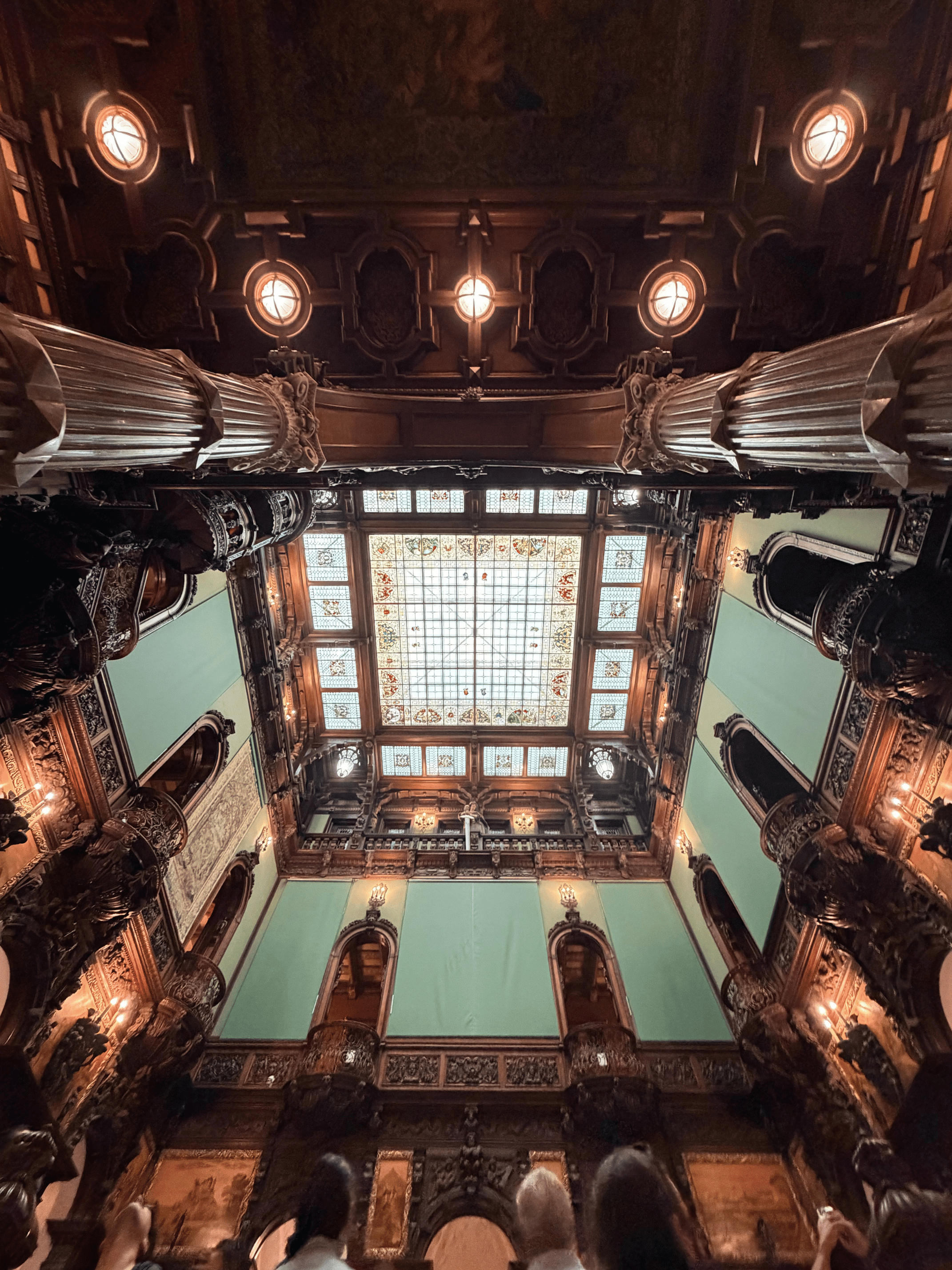
Hall of Honour at Peleș Castle in Sinaia, Romania
London: one man, nineteen years, a terraced house
And then there is the example closest to home, in every sense. At 575 Wandsworth Road in south London stands the house of Khadambi Asalache, the Kenyan-born poet and civil servant who spent nineteen years hand-carving fretwork across the floors, walls, and ceilings of his modest terraced home. Entirely self-taught, working with reclaimed pine rescued from skips, he drew on the traditions this piece has been tracing: the carved coral houses of Lamu on the Swahili coast, Moorish and Ottoman pattern, the screens of Damascus and the Alhambra. When he died in 2006, he left the house to the National Trust, and it stands today exactly as he made it.
I wrote about Asalache in an earlier Diary post on small moments of art, and I return to him here because his house is, to me, the entire history of fretwork condensed into a single address. Every tradition above required a workshop, a guild, a climate, a patron. Asalache required a chisel, salvaged wood, and two decades of evenings after work at the Treasury. The result proves something quietly radical: this craft was never really about wealth or grandeur. It was about attention, sustained until it became a world.
The common language of fretwork
Look across all of these, Jodhpur, Fez, Malta, Sinaia, Wandsworth Road, and the shared grammar emerges. Fretwork manages light, tempering harsh sun into pattern. It manages air, cooling and moving it. It manages sight, letting you observe without being observed. And it manages meaning, carrying protective symbols, declarations of faith, royal ambition, or simply the maker's pleasure in geometry. It is architecture's most sociable boundary: a wall that keeps talking to the other side.
At Bombay Design Co.'s designs are, in a sense, fretwork's descendants on fabric. The interplay of positive and negative space, the repeated geometric rhythm, the arches of our Bombay Deco series echoing scalloped screen-tops, all of it draws on the same visual grammar the screen-makers perfected. When we embroider a motif, thread by thread, they are working in the same tradition of patient, additive pattern-making that Asalache practised with a chisel, the slow accumulation of small decisions into something that rewards a second look.
A screen, in the end, is a generous kind of wall. It gives you shelter without asking you to stop looking at the world. Perhaps that is why the idea kept being reinvented, from the Swahili coast to the Carpathians: everyone, everywhere, wanted both things at once, and the makers found a way to say yes.
— Alpesh, Founder, Bombay Design Co. I'd love to hear from you, write to me at alpesh@bombaydesign.co